Star Planner
Rescue a failed prototype and rebuild it as a product people could keep using.
A rescue project became a chance to rebuild the product around the daily behavior it wanted to create—not the screens the first prototype happened to contain.
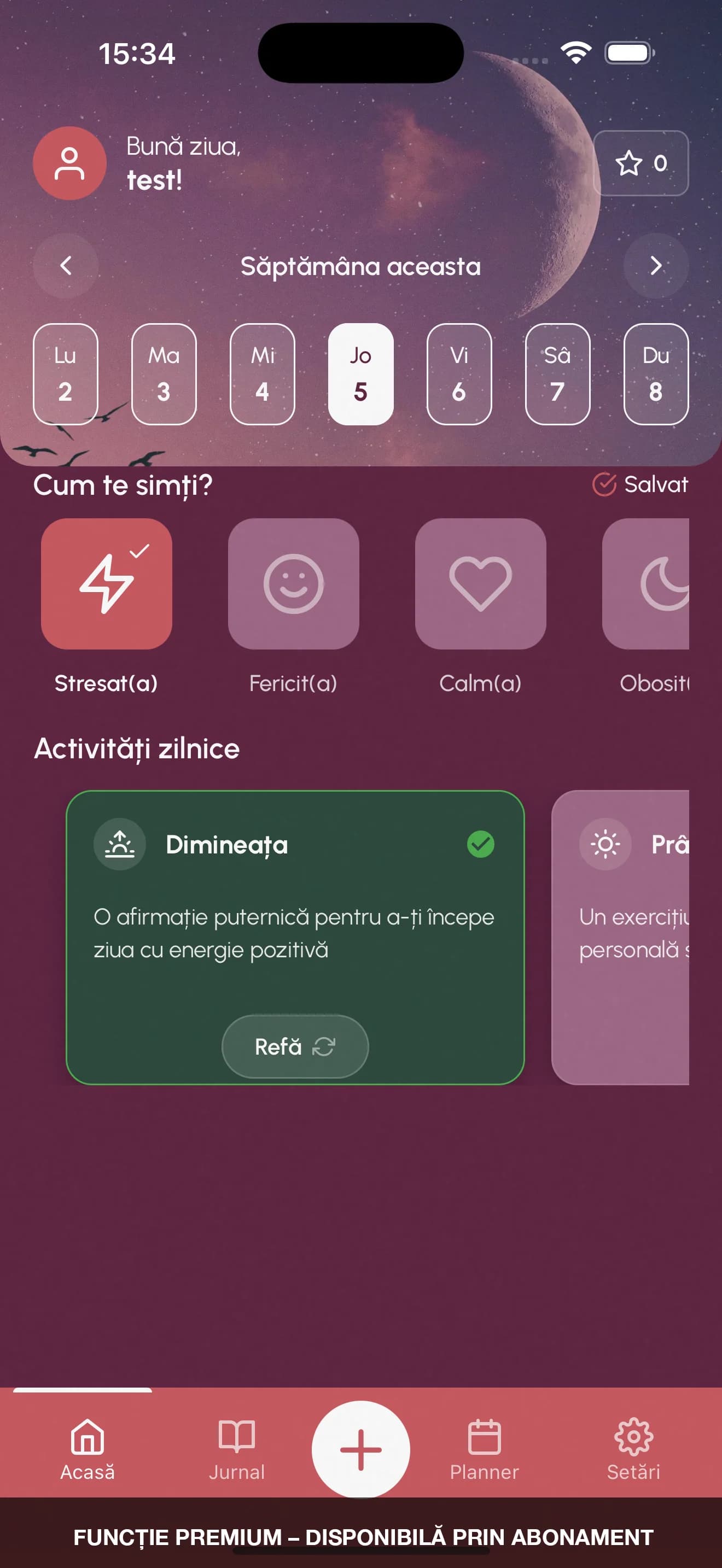
A polished prototype with nowhere safe to put a person’s history.
The inherited application looked close to launch from the outside, but its most important data lived only on the device. Journals and plans could disappear with a reinstall, reminders were unreliable, and the architecture made seemingly small improvements risky.
That mismatch mattered because the product asked for trust. People were being invited to write, plan, and return every day. The system underneath had to protect that continuity before visual polish or a longer feature list could create real value.
Rebuild the core around a daily emotional loop.
We reduced the product to a behavioral sequence: notice how you feel, set an intention, turn it into a practical action, and return through a prompt that feels timely rather than mechanical. That became the test for both the new architecture and the redesigned flows.
Cloud identity and synchronization were established first. With reliable ownership of the data in place, journaling, planning, tasks, affirmations, and reflection could behave as connected parts of one practice instead of separate destinations in an app menu.
Make depth feel light enough to use every day.
The React Native rebuild introduced accounts, cloud synchronization, push notifications, subscriptions, and a custom calendar foundation. The interface paired those systems with softer prompts, a daily agenda, intention-setting, and reflection exercises.
The product deliberately avoided forcing every ritual into every day. Timely prompts and visible continuity invited return, while the underlying system kept state consistent across sessions and devices.
From failed prototype to a living mobile product.
The core rescue was completed quickly enough to preserve momentum, but the more important result was a stable base for release. Star Planner reached both iOS and Android and moved from an uncertain prototype into an actively used product.
With more than 10,000 Google Play installs, the work now has real usage to learn from. The client can improve content and routines without reopening the architectural questions that once threatened the entire product.
We did not rescue the codebase. We rescued the daily reason to open the product.
Spicy Coconut / Product principle
A product model that can keep learning.
Star Planner’s foundation now reflects its promise: small, connected moments that build a longer personal practice. New content can change without destabilizing identity, synchronization, reminders, or the daily loop.